
Published 26 May 2026
A new bulk RNA-seq dataset from King’s College London is now available in FaceBase!
Contributors: Abigail S. Tucker, Marta Perera, Joshua Brickman (King’s College London)
Description:
This study examined the role of the fibroblast growth factor (FGF) signalling pathway during branching morphogenesis in the murine embryonic submandibular salivary gland. The data compare pharmacological FGFR inhibition with conditional deletion of Fgfr2 (K14Cre;Fgfr2fl) from E13.5 +48 hours, revealing a multitude of roles for FGF signalling — including effects on fate decisions and tissue interactions. The dataset includes bulk RNA-Seq fastq files and the related counts matrix.
FaceBase Dataset:
Joshua Brickman, Abigail S. Tucker, Marta Perera. FGF signalling orchestrates multiple roles during salivary gland branching morphogenesis. FaceBase Consortium https://doi.org/10.25550/AH-J1XR (2026).
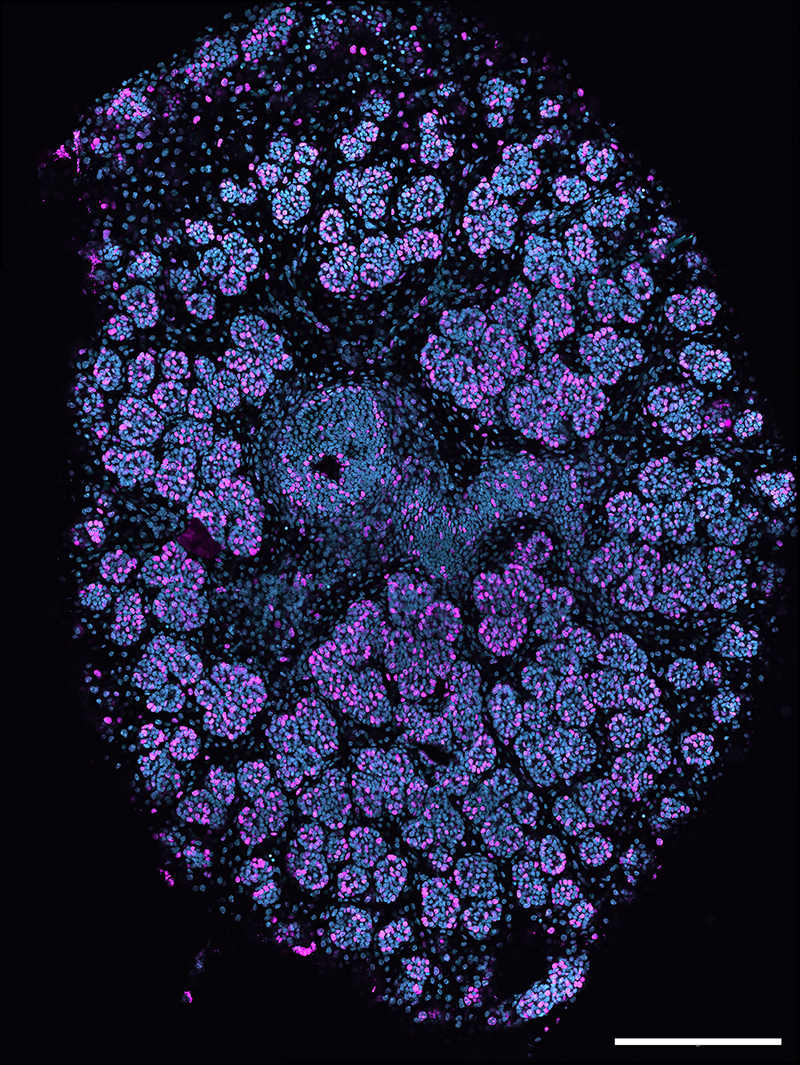
Image: Salivary gland stained with BrdU (proliferative cells, magenta) and DAPI (cyan). Image courtesy of Marta Perera.