
Published 15 September 2026
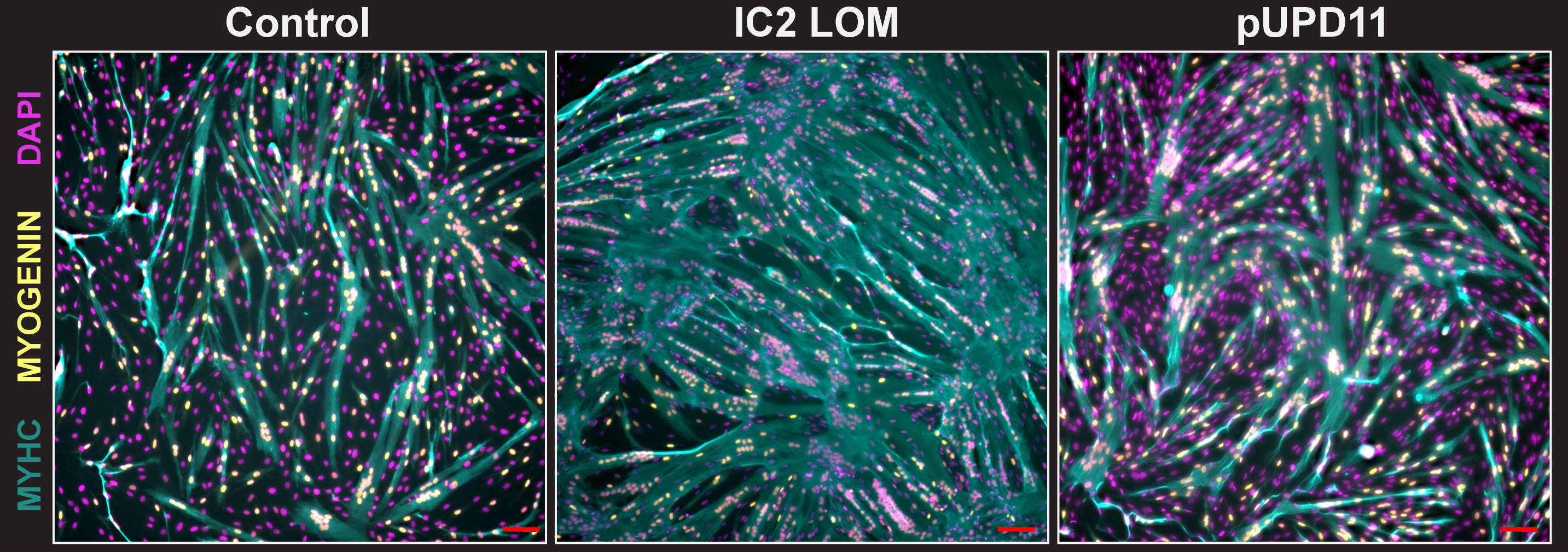
FaceBase has released a new dataset from the Kalish Lab at Children’s Hospital of Philadelphia (CHOP) containing bulk RNA sequencing data from muscle stem cells (satellite cells) isolated from the tongues of children with and without Beckwith-Wiedemann syndrome (BWS). BWS is an overgrowth disorder caused by genetic and epigenetic changes on chromosome 11p15, and an enlarged tongue (macroglossia) is one of its most common features. By comparing cells from two molecular subtypes of BWS with nonsyndromic controls as they develop into skeletal muscle, these data can help researchers identify the molecular pathways behind altered tongue muscle development in BWS macroglossia.
Contributors: Elisia D. Tichy, Jennifer M. Kalish (Children’s Hospital of Philadelphia)
Description:
This dataset contains very low input bulk RNA-seq data from tongue-derived satellite cells. Human pediatric samples include nonsyndromic controls and two BWS molecular subtypes: IC2 LOM (loss of methylation at imprinting control region 2) and pUPD11 (paternal uniparental disomy of chromosome 11). After FACS isolation of satellite cells (defined as CD45-/CD324-/CD56+/CD82+), cells were plated in myoblast growth media for 6 days and then switched to differentiation media for 2 days.
Libraries were prepared from 5 ng of total RNA and sequenced paired-end on an Illumina NovaSeq X. The dataset includes FASTQ files (4 per sample) for 3 controls, 3 BWS IC2 LOM, and 3 BWS pUPD11 samples.
Supported by the National Institute of Dental and Craniofacial Research (award R01DE033646).
Accessing the data
This is restricted-access human data (data use limitation: General Research Use). To gain access, you must first complete the process outlined here.
Explore the dataset in the FaceBase Data Browser
FaceBase Dataset:
Elisia D Tichy, Jennifer M Kalish. Gene expression patterns in pediatric tongue-derived satellite cells during differentiation (Bulk RNAseq). FaceBase Consortium https://doi.org/10.25550/A5-VYP4 (2026).
Associated Publication:
Elisia D Tichy, Anna T Nguyen, Mariah A Byrne, Rose D Pradieu, Gavriela Kalish-Schur, Mara Fallon, Snehal Nirgude, Darryl Kinnear, Harry P Kozakewich, Jennifer M Kalish. Myogenic dysregulation underlies human tongue overgrowth in Beckwith-Wiedemann syndrome. iScience 29(10), 117575 https://doi.org/10.1016/j.isci.2026.117575 (2026).